How the ‘Deliver Me From Nowhere’ Sound Team Created an Authentic Aural Experience for the Bruce Springsteen Drama
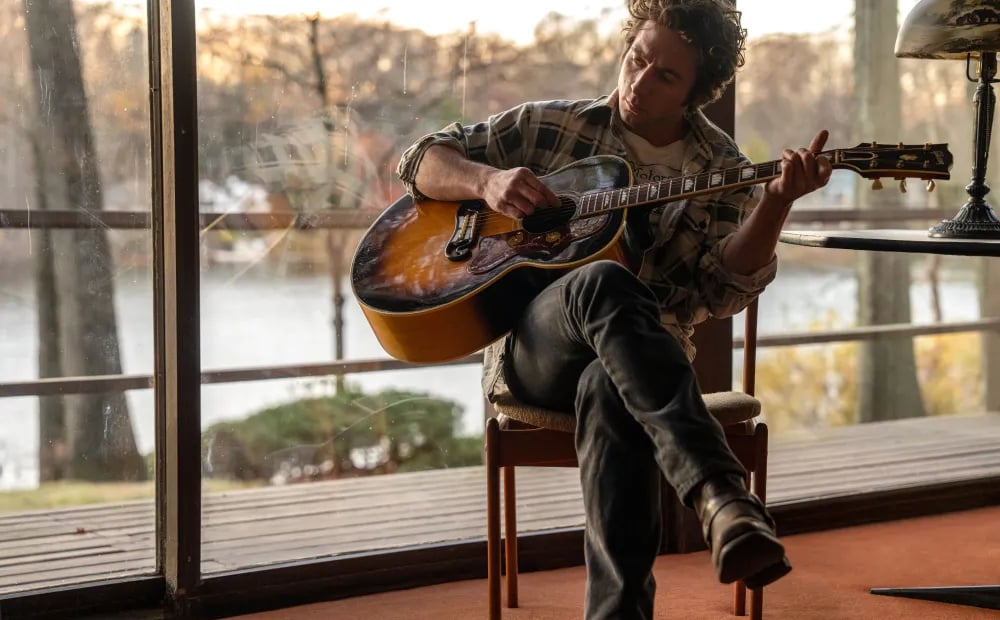
According To The variety The Scott Cooper film, based on Warren Zanes’ book about the making of Bruce Springsteen’s “Nebraska” and “Born in the USA,” revolves around the sound of those records, and if he can break through to his family, to himself, to be heard. We see Jeremy Allen White, as Springsteen, writing and recording “Nebraska” on a four-track cassette recorder in the bedroom of a rented New Jersey lake house in 1981-82. Authenticity to the period was key for the sound team. “Jeremy did a ton of work with vocals and guitar,” says Jason Ruder, supervising music editor and a “huge fan of ‘Nebraska.’” He notes that Springsteen, who was on set almost every day, opened his recording vault to the production. “We had all the vocals Jeremy had done. We had all the tracks I was given by Bruce from the original four tracks. So from that, we were able to go into the editing process of the film, which took about eight months.” Ruder notes that they sourced four-track recorders, and the Echoplex, the tape delay box “that was kind of an iconic sound of that album.” “It was kind of a dream job, to be honest,” says Ruder as he talks with fond nostalgia about the four-track recorder used in the film, the TEAC Tascam Portastudio 144. “It was actually the first tape recorder I had in high school. I had my first band at 13. I had one of those boxes, so I had a history with it. A lot of research was put into Springsteen’s process, as well as “everything from the microphones that were used to the guitars that were played to studying a little bit of the acoustics in a house like that at Colt’s Neck [where Springsteen was holed up].” It was all those details that went into the music and sound concepts for the film. I always use vintage equipment,” says production sound mixer Tod Maitland. “I will always double and triple microphone everything. So I’ll always have a vintage microphone going. … But for all that performance stuff that’s in the house, that’s all on those vintage microphones.” Maitland also admits that “I even went to the point of getting another one of those TEAC four-track cassette decks and actually recorded everything on that also.” The lake house had good acoustics, according to Maitland, and the songs were soft, so there’s less sound bouncing off the walls. “So when we’re recording ‘Nebraska,’ he had the microphones on camera in front of him: one for guitar and for vocals.” When the film shifted to scenes at the Power Station recording studio in New York City, Maitland was delighted. “You know, the great thing about working in recording studios is that they’re recording studios, and they’re actually set up for people like me to record the best that you can possibly record,” he says. “And then they have all the vintage microphones there, because Springsteen recorded there back in the day.” The sound and music teams were incredibly motivated to get the details correct. “Even when we get to the scene where Bruce is frustrated” that he can’t match the distortion he created on his “Nebraska” bedroom recording at the Power Station, says Ruder, “we were able to manufacture that distortion in a way that that seemed real, and it was great because Bruce would watch cuts, and he was able to give feedback and weigh in on things. So it was just sort of always setting the bar for what was authentic to each moment.”
brightlight
12/15/20251 min read
My post content